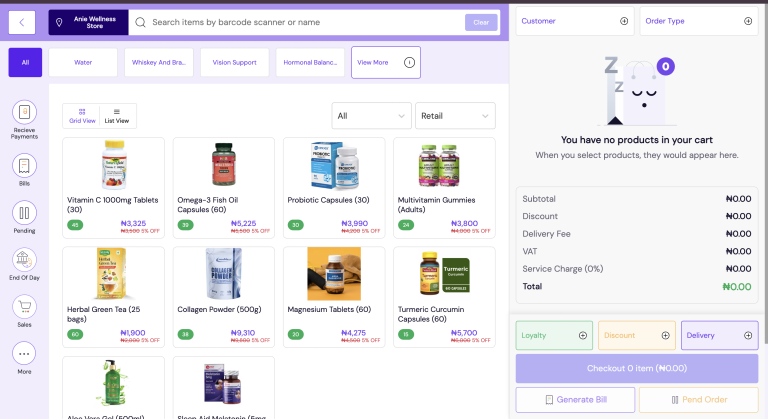
Overview: Managing Pharmacy Inventory in a Growing Nigerian Business
Pharmacy inventory management in Nigeria becomes increasingly complex as businesses grow beyond a single outlet. Many pharmacies start with basic stock tracking methods, but expansion quickly exposes gaps in visibility, control, and accountability.
Founded in 2017 and based in Lagos State, Foye Pharmacy grew from a single location into a multi-branch operation. As the business expanded, the need for a more reliable and centralized pharmacy inventory management system became unavoidable.
The Challenge: Disconnected Systems and Limited Visibility
Before adopting a unified solution, Foye Pharmacy relied on multiple accounting and inventory tools to manage daily operations. These systems created several challenges:
- Inventory and payments were managed on separate platforms
- One of the systems operated offline, limiting real-time access
- High subscription and renewal costs made scaling difficult
- The software was designed for foreign markets, not Nigerian pharmacies
- Business owners could not monitor sales or stock remotely

These challenges highlight why pharmacy inventory management in Nigeria requires systems that provide real-time visibility, expiry tracking, and centralized control across multiple branches.
For a pharmacy handling fast-moving and regulated products, the lack of real-time inventory monitoring increased the risk of stock discrepancies, expired products, and operational inefficiencies.
Why Real-Time Inventory Management Matters for Nigerian Pharmacies
In Nigeria’s pharmacy sector, inventory accuracy directly affects:
- Drug availability
- Regulatory compliance
- Cash flow
- Customer trust
Guidance from the International Pharmaceutical Federation (FIP) emphasizes the importance of effective inventory monitoring in reducing expired medicines and ensuring pharmacy compliance, particularly in pharmacy environments managing high product turnover.
Without real-time inventory management, pharmacy owners often struggle with:
- Stock-outs of essential medications
- Overstocking slow-moving products
- Manual reconciliation across branches
- Limited insight into daily performance
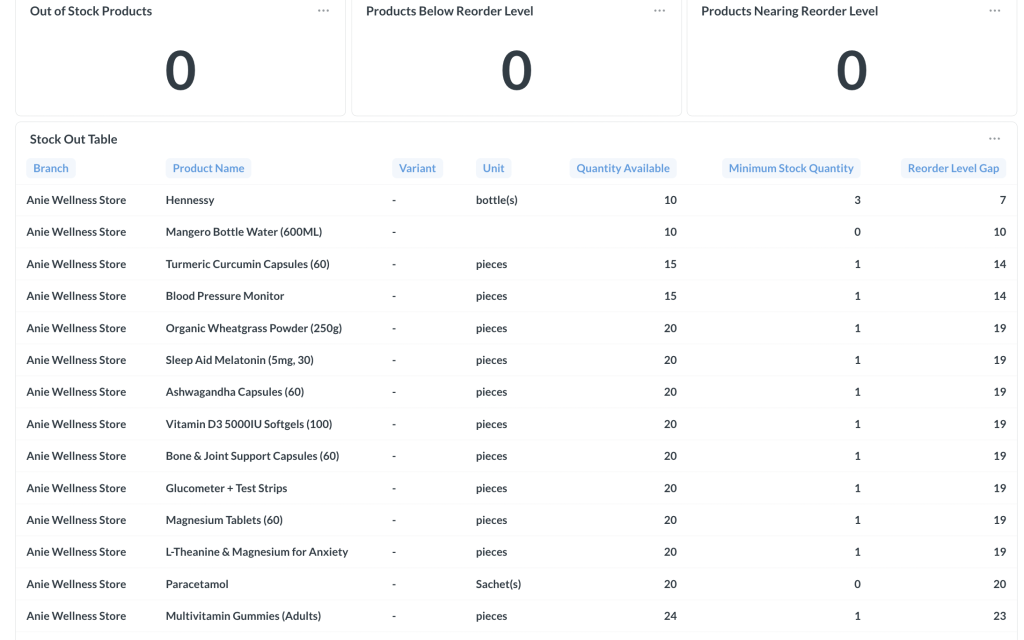
These challenges made it clear that Foye Pharmacy needed a cloud-based inventory management system built for the realities of operating a pharmacy in Nigeria.
The Solution: Switching to a Centralized Pharmacy Inventory System
After reviewing their operational needs, Foye Pharmacy adopted Lumi Business to manage inventory and payments in one system.
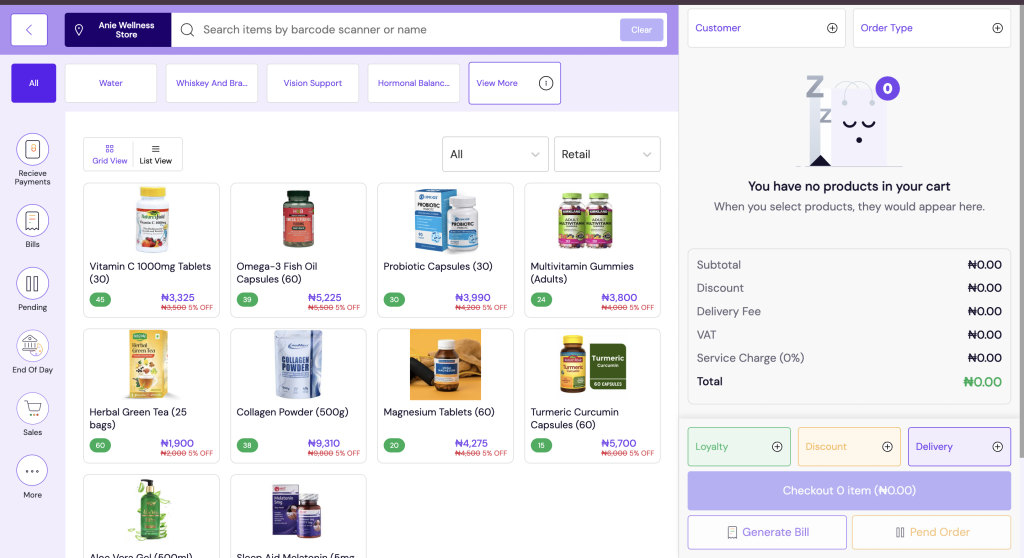
The decision was driven by the need for:
- Real–time inventory tracking
- Centralized management across multiple branches
- Remote access to sales and stock data
- A solution tailored to Nigerian businesses
“Our previous software was too expensive and not tailored for businesses like ours. The offline nature and lack of real-time monitoring were major issues.”
— Opeyemi Omofoye, CEO, Foye PharmacyBy moving to a single, cloud-based platform, the pharmacy eliminated the inefficiencies caused by disconnected tools.
Results: Improved Control and Operational Efficiency
Since implementing Lumi Business, Foye Pharmacy has significantly improved how inventory is managed across its branches.
Key outcomes include:
- Real-time visibility into stock levels and sales.
- Easier monitoring of multiple locations from anywhere.
- Faster decision-making based on accurate data.
- Reduced manual reconciliation and errors.
- Better operational oversight as the business continues to grow.
“Lumi Business has made it easy for me to monitor my business in real time, no matter where I am. That’s been a game changer for us.”
— Opeyemi Omofoye, CEO, Foye Pharmacy
With a centralized system in place, Foye Pharmacy is now better equipped to scale while maintaining inventory accuracy and operational discipline.

Key Takeaways for Pharmacy Owners in Nigeria
This case study highlights several important lessons for pharmacies operating in Nigeria:
- Multi-branch pharmacies need centralized inventory management
- Offline systems limit visibility and control
- Real-time data improves accountability and planning
- Software designed for Nigerian businesses performs better than foreign alternatives
Frequently Asked Questions (FAQs)
What is pharmacy inventory management?
Pharmacy inventory management is the process of tracking, controlling, and optimizing drug stock to ensure availability, reduce losses, and maintain compliance.
Why is real-time inventory management important for pharmacies in Nigeria?
Real-time inventory management helps pharmacies prevent stock-outs, manage expiries, detect discrepancies, and monitor multiple branches efficiently.
Can a pharmacy manage multiple branches from one system?
Yes. With a cloud-based inventory system like Lumi Business, pharmacy owners can manage inventory, sales, and reporting across all branches from a single dashboard.
Are foreign pharmacy software solutions suitable for Nigerian businesses?
Many foreign solutions are expensive, offline, or poorly adapted to Nigerian operational realities. Local or Nigeria-focused systems like Lumi Business often provide better flexibility and support.
How does Lumi Business support pharmacy inventory management?
Lumi Business enables real-time inventory tracking, integrated payments, and prescription generation, while also helping pharmacies track expired products, reconcile stock accurately, and monitor out-of-stock items—making it easier to scale while maintaining control.
Why is pharmacy inventory management in Nigeria challenging?
Pharmacy inventory management in Nigeria is challenging due to a combination of high product turnover, strict regulatory requirements, and limited real-time visibility into stock levels. Many pharmacies still rely on manual or offline systems, making it difficult to track fast-moving drugs, monitor expiry dates, and reconcile inventory accurately across locations. These challenges are amplified for growing or multi-branch pharmacies, where delayed reporting and fragmented systems increase the risk of stock discrepancies, expired medicines, and operational inefficiencies.