Recipe management is one of the most overlooked parts of running a profitable restaurant.
Many restaurant owners focus on sales, marketing, and customer experience — but behind the scenes, poor recipe and ingredient tracking quietly eats into margins. When ingredients are not tracked accurately, food costs rise, stock records become unreliable, and pricing decisions are based on guesswork.
That’s why recipe management for restaurants is no longer a “nice-to-have.” It’s a core operational requirement for any restaurant that wants to grow sustainably.
What Is Recipe Management in a Restaurant?
Recipe management is the process of defining how each menu item is prepared, tracking the ingredients used, and linking those ingredients to inventory and cost.
In order for recipe management for restaurants to be effective, Instead of thinking in loose estimates like: “one spoon of oil”, “some rice”, “half chicken”, ingredients need to be more measurable.
Recipe management for restaurants turns meals into measurable, trackable recipes with defined quantities.
This allows restaurants to know:
- how much of each ingredient is used per dish
- how much each meal actually costs to prepare
- how inventory levels change with every sale
Why Recipe Management for Restaurants Matters
Without proper recipe management, restaurants often experience:
- rising food costs without clear reasons
- frequent stock shortages or over-purchasing
- inconsistent portion sizes
- difficulty pricing menu items correctly
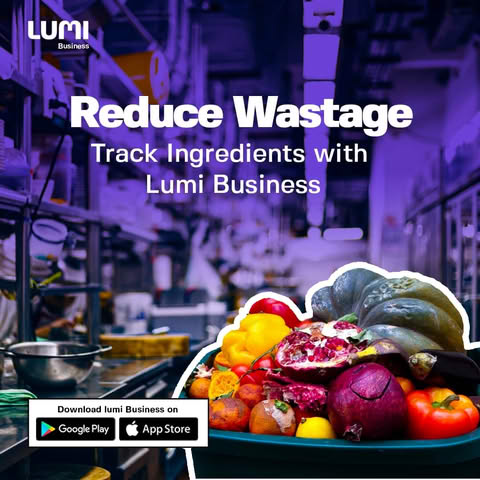
- hidden wastage
These problems usually don’t show up immediately, they accumulate over time.
Strong recipe management for restaurants gives owners visibility and control, not just reports.
How Restaurants Traditionally Manage Recipes (and Why It Fails)
Many restaurants still manage recipes using:
- handwritten notes
- memory and experience
- manual stock adjustments
- end-of-day estimates
While this may work at very small scale, it breaks down quickly as:
- order volume increases
- staff changes
- menu items expand
- multiple people cook the same dish
At that point, manual recipe tracking becomes unreliable.
What Are Composite Products in Recipe Management for Restaurants?
This is where composite products for restaurants come in.
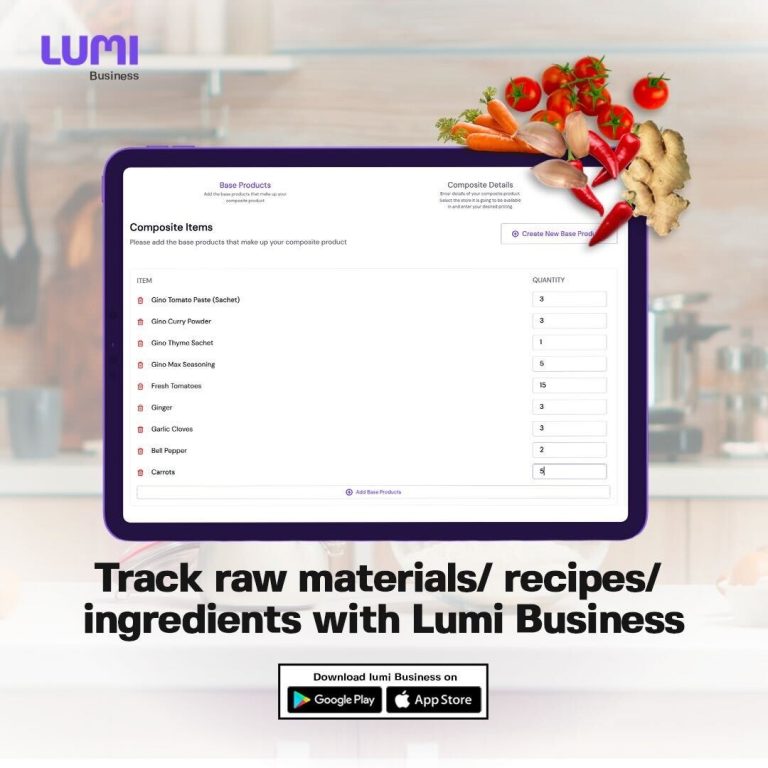
A composite product is a menu item made up of multiple base ingredients, each with a defined quantity. Instead of selling ingredients individually, the restaurant sells one finished product, while the system automatically deducts the correct ingredients from inventory.
For example:
Jollof Rice with Chicken
- Rice: 2 cups
- Chicken: 0.5 kg
- Oil: 30 ml
- Pepper mix: fixed portion
When this dish is sold:
- the system records one sale
- each ingredient is deducted automatically
- food cost is calculated accurately
Composite products turn recipes into live inventory logic, not static instructions.
How Composite Products Improve Recipe Management
Using composite products allows restaurants to:
- link every sale to ingredient usage
- track real food cost per plate
- standardise portion sizes
- reduce wastage
- make data-driven pricing decisions
Instead of guessing how much stock was used, restaurants see exact consumption patterns.
On-Demand vs Stocked Recipes
Recipe management can support different kitchen styles:
On-Demand Recipes
Meals are prepared only when ordered.
- Ingredients are deducted at point of sale
- Ideal for freshly cooked meals
- Most common in dine-in restaurants
Stocked Recipes
Meals are prepared in advance.
- Finished items are stocked
- Ingredients are deducted during production
- Useful for pre-packed meals or grab-and-go items
Good recipe management systems support both models.
Recipe Management and Kitchen Operations
Recipe management isn’t just about inventory — it directly affects kitchen performance.
With proper recipe tracking:
- kitchen staff follow consistent preparation standards
- food quality becomes predictable
- portion control improves naturally
- inventory aligns with actual cooking patterns
This reduces friction between management and kitchen teams.
How Lumi Business Supports Recipe Management for Restaurants
Lumi Business supports recipe management through composite products built directly into inventory and POS workflows.
Restaurants can:
- define recipes using base ingredients
- set exact quantities and units
- choose whether a recipe is on-demand or stocked
- link recipes directly to sales and inventory
Once set up, every sale automatically updates ingredient stock levels — no manual adjustments required.
Recipe Management vs Manual Ingredient Tracking
| Manual Tracking | Recipe Management with Composite Products |
|---|---|
| Estimates and guesswork | Exact ingredient deduction |
| Delayed stock updates | Real-time inventory |
| Hard to calculate food cost | Automatic cost visibility |
| Inconsistent portions | Standardised recipes |
| High wastage risk | Better control |
Who Needs Recipe Management the Most?
Recipe management is especially important for:
- restaurants with multiple menu items
- kitchens struggling with food cost control
- businesses experiencing frequent stock issues
- owners who want visibility without micromanaging staff
As sales volume increases, recipe management moves from optional to essential.
Comparison: Recipe Management Capabilities in Popular Nigerian Restaurant POS Systems
Not all restaurant systems treat recipes and ingredients the same way. The table below shows how popular restaurant software stacks up in terms of recipe management and ingredient tracking
| Feature / Software Provider | Lumi Business | Soony Restaurant & Bar | eRestaurant Nigeria | QWeek | MyFoodTrack |
|---|---|---|---|---|---|
| Composite product support (define menu items as ingredient bundles) | ✅ Yes — native and easy to configure | ✅ Yes — available via recipe/product modules | ⚠️ Limited | ❌ Not a focus (order-centric) | ✅ Yes — inventory-linked products |
| Ingredient inventory deduction (auto deduct stock on sale) | ✅ Yes — automatic | ✅ Yes — dependent on setup | ⚠️ Basic inventory | ❌ No | ✅ Yes— cloud stock updates |
| Multiple units support (kg, cups, pcs) | ✅ Flexible UoM per ingredient | ✅ Yes | ⚠️ Supported (general inventory) | ⚠️ Basic units only | ❌ No |
| Food cost visibility / reporting | ✅ Yes — tied to composite products | ⚠️ Yes — through reporting modules | ⚠️ Partial reporting | ❌ Limited | ⚠️ Inventory cost reports |
| On-demand vs pre-made (stocked meals) | ✅ Available | ⚠️ Configurable | ⚠️ Depends on setup | ❌ Not supported | ⚠️ Cloud stock workflows |
| Ease of setup (recipe tracking) | High — restaurant friendly | Medium — modules require configuration | Medium | Low — not recipe focus | Medium — cloud setup |
If your restaurant needs strong food cost visibility, automatic inventory deduction, and real-time ingredient tracking across POS and kitchen workflows, systems like Lumi Business provide deeper support for recipe management than general POS tools.
1. Lumi Business — Best for Recipe Control & Cost Insight
Lumi Business offers native support for composite products, meaning you can build menu items from ingredients with defined quantities and have stock automatically deducted as these items are sold. This gives real-time ingredient tracking and food cost visibility — critical for performance and pricing decisions. It also integrates cleanly with kitchen workflows (e.g., kitchen display screens), so recipe management doesn’t stay siloed in the back office.
2. Soony Restaurant & Bar — Local POS with Recipe Module
Soony Restaurant & Bar Management Software supports recipe modules and inventory, allowing restaurants to set composite products. However, depth and automation may depend on package and setup. It offers more functionality than basic POS systems, but requires more manual setup and coordination to connect ingredient tracking with kitchen operations compared to Lumi Business.
3. eRestaurant Nigeria — Basic Inventory, Limited Recipe Focus
eRestaurant Nigeria provides core POS and inventory features. While it supports basic stock tracking and product definitions, the product documentation does not clearly highlight automatic recipe/ingredient deduction. If recipe management is important, confirm with the vendor or request a demo focused on food cost workflows.
4. QWeek — Order & QR-Focus, Not Recipe-Driven
QWeek excels in order taking, QR menus, and basic dine-in flows, but recipe management is not a core focus. It handles products at the item level rather than ingredient units. For restaurants prioritising ingredient visibility and cost tracking, QWeek is less suitable.
5. MyFoodTrack — Cloud POS With Inventory Tie-Ins
MyFoodTrack includes inventory and stock control features that support units and stock deduction on sales. It can be used for simpler recipe workflows, but its composite/recipe capabilities are not as explicit or deep as Lumi Business. It still provides a bridge between sales and ingredient stock — a step up from order-only systems.
Conclusion
Restaurants don’t lose money because food is expensive — they lose money because ingredient usage is invisible.
Effective recipe management for restaurants brings clarity to:
- what is being sold
- what is being consumed
- what is actually profitable
Composite products make this possible by turning recipes into trackable, inventory-linked systems.
For restaurants that want to grow without leaking profit, recipe management is not an advanced feature — it’s a foundation.
Recipe Management: Quick FAQs
What is recipe management in a restaurant?
Recipe management is the process of defining how each menu item is prepared, tracking the ingredients used, and linking those ingredients to inventory and cost. It helps restaurants control food costs and maintain consistent portions.
What are composite products in recipe management?
Composite products are menu items made up of multiple ingredients with fixed quantities. When a composite product is sold, the system automatically deducts the correct amount of each ingredient from inventory.
Why is recipe management important for food cost control?
Without recipe management, ingredient usage is estimated rather than measured. This leads to wastage, inaccurate stock levels, and unclear profit margins. Proper recipe management shows the true cost of each dish.
Can recipe management work without software?
It can work at a very small scale, but manual tracking breaks down as order volume increases. Software makes recipe and ingredient tracking consistent and reliable, especially during busy service periods.
Do all restaurant POS systems support recipe management?
No. Many POS systems track items at the product level only. True recipe management requires composite products, ingredient-level inventory deduction, and food cost visibility.
How does Lumi Business support recipe management?
Lumi Business supports recipe management through composite products that link menu items directly to ingredients, inventory, and sales—allowing restaurants to track usage and costs automatically.
One Response
Small inefficiencies can really add up over time, and that’s where recipe management makes a huge difference. It’s great that the post highlights how measurable ingredients can prevent waste, control costs, and improve consistency.