
Price increase in Nigeria have become a daily reality for retail business owners. From supermarkets to pharmacies and fashion stores, the cost of goods keeps rising — and many business owners are struggling to keep up.
But beyond understanding why prices are increasing, the real question is:
How do you adjust your product prices quickly, accurately, and at scale without hurting your business?
The Reality of Price Increase in Nigeria
In 2024, Nigeria’s inflation rate peaked at 34.19%, according to the National Bureau of Statistics (NBS). Food inflation — which directly impacts most retail businesses — rose above 40%, making it one of the highest in the country’s history.
Even into 2025 and early 2026:
- Inflation remained in double digits
- Food prices continued rising year-on-year
- Transportation and import costs stayed unstable
For retailers, this means one thing:
The cost price you bought products last month is likely not the same today.

Why Price Increase in Nigeria Are a Big Problem for Retailers
1. Your Profit Disappears Quietly
If you don’t update your selling prices fast enough, you may be selling at:
- Reduced margins
- Break-even
- Or even at a loss
2. Manual Price Updates Are Stressful
Many retailers still:
- Change prices one product at a time
- Use notebooks or memory
- Forget to update some items
This leads to:
- Pricing errors
- Staff confusion
- Customer disputes
3. Frequent Changes Create Operational Chaos
When supplier prices change weekly, updating prices manually becomes unrealistic — especially if you have:
- 100+ products
- Multiple product categories
- Different price tiers
The Smarter Way: Adjust Prices in Bulk by Percentage
Instead of updating prices one by one, smart retailers are now:
Increasing or reducing prices across multiple products at once using a percentage
For example:
- Increase all beverages by 10%
- Reduce slow-moving products by 5%
- Adjust a category like “groceries” by 15%
This approach is:
- Faster
- More consistent
- Less prone to errors
How Lumi Business Helps You Handle Price Increases Easily
With Lumi Business, you don’t need to stress about price updates anymore.
You can:
Reduce Prices for Promotions
Running a discount campaign?
Quickly:
Apply it across multiple products instantly
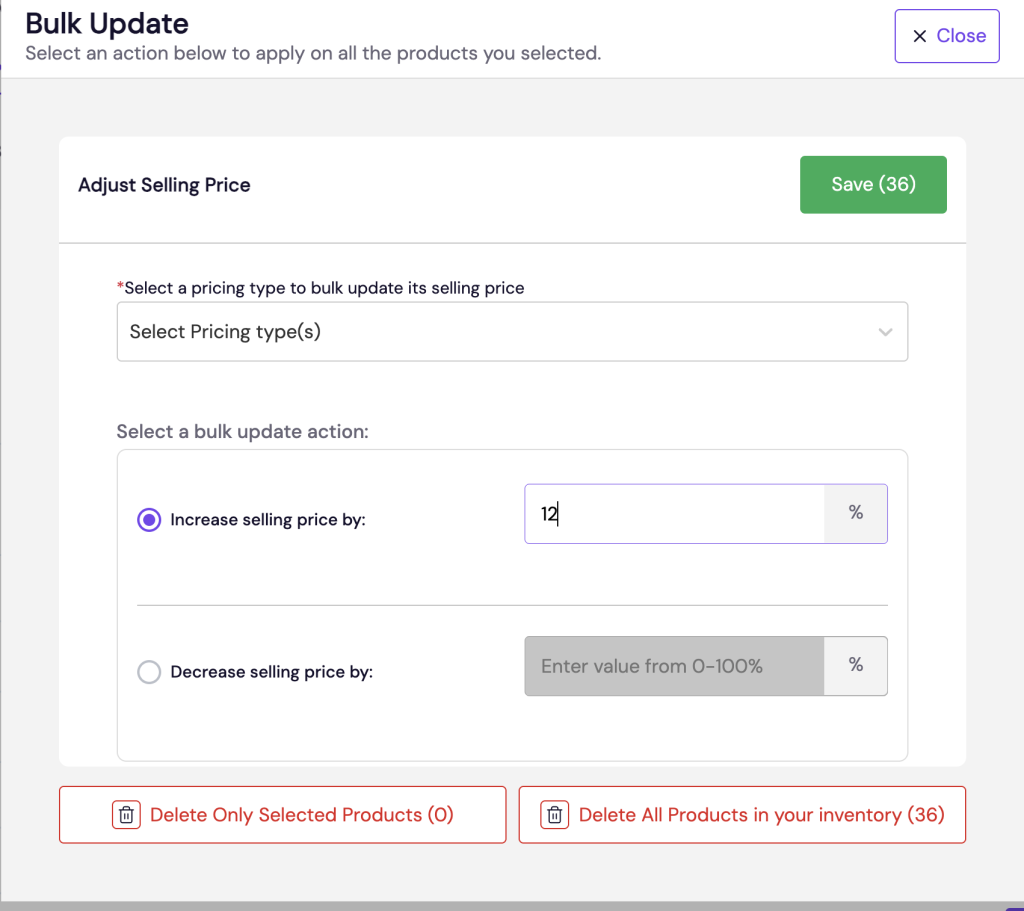
Increase Prices in Bulk
Reduce prices by a fixed percentage
Apply a percentage increase across:
- Entire inventory
- Specific categories
- Selected products
Maintain Profit Margins Automatically
Instead of guessing:
- Adjust based on cost changes
- Keep profit margins consistent
- Avoid underpricing
Save Time and Reduce Errors
No more:
- Editing products one by one
- Forgetting items
- Pricing inconsistencies
Everything updates instantly and accurately
Imagine this:
Your supplier increases the price of household products.
Without a system:
- You spend hours updating prices
- You miss some items
- You lose money on old prices
With Lumi Business:
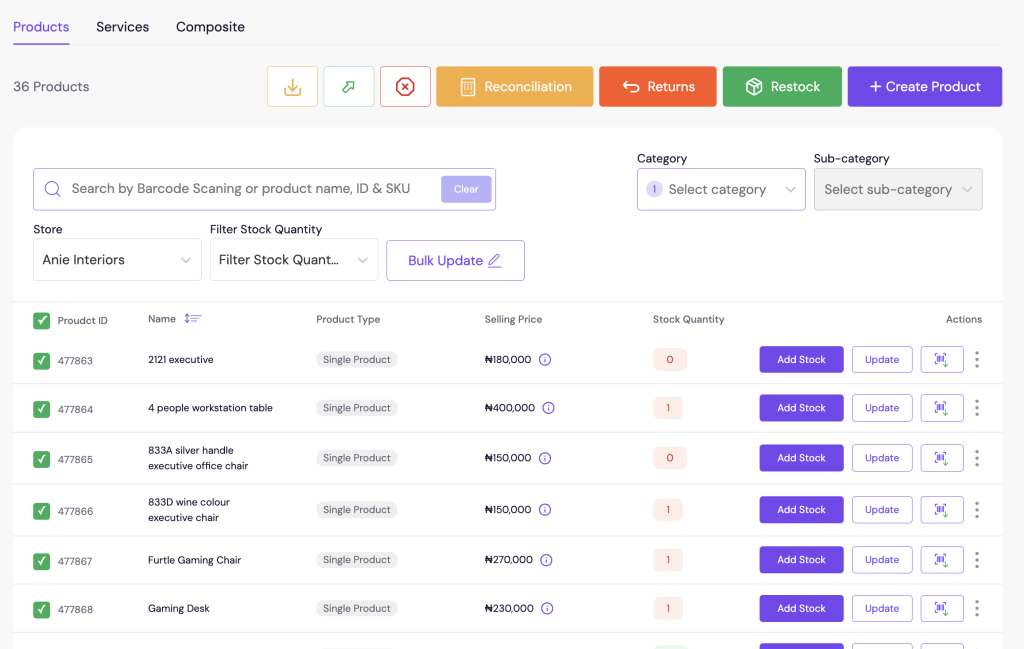
- You filter for “Grocery” category
- Select All
- Apply +12% increase
- Done in seconds
Best Practices When Increasing Prices
Even with the right tools, strategy matters.
1. Don’t Increase Randomly
Base your adjustments on:
- Cost price changes
- Target margins
2. Group Products Smartly
Adjust prices by:
- Category
- Supplier
- Product type
Lumi Business allows business owners to filter products by category.
3. Communicate With Customers
If needed:
- Explain price changes
- Offer alternatives
Lumi Business allows business owners send bulk SMS to customers to inform them about price changes.
4. Track What Sells After Price Changes
Some products may:
- Drop in demand
- Need adjustment
Use Consumption Report on Lumi Business to track demand of products.
Conclusion
Price increase in Nigeria are unavoidable and the retailers who will win are those who:
- Act quickly
- Use data
- Adjust prices efficiently
Instead of struggling with manual updates, you can:
- Increase or reduce prices across your entire inventory in seconds.
- Maintain your margins
- Stay in control of your business
To get started, sign up on Lumi Business