For many small business owners in Nigeria searching for the best inventory software Nigeria can offer, one question sits at the top of the priority list: “How do I manage my stock better?”
Many business owners searching for the best inventory software Nigeria often struggle to find tools built for local realities.
Whether you run a supermarket, mini-mart, fashion store, pharmacy, salon, electronics shop, or even an online business, knowing what is in stock, what is low, and what is selling fast is the foundation of healthy business operations.
So naturally, when you’re ready to improve how you manage inventory, the first thing you Google is:
“Best Inventory Software Nigeria What’s the best inventory software for small businesses in Nigeria?”
But answering that question isn’t just about listing software tools. It’s about understanding what actually makes inventory management challenging in Nigeria — and what makes a solution truly “the best” for this market.
Why Using the Best Inventory Software in Nigeria Matters
When comparing different tools, the best inventory software Nigeria businesses prefer are those that support offline mode, mobile checkout, and multi-bank reconciliation. Here is why the Best Inventory Software for Small Businesses in Nigeria Must Be Built for Local Realities.
1. A Large, Informal-First Business Landscape
Nigeria’s economy is driven by the informal sector. According to a report by Techcabal, the informal sector contributes over 58% of Nigeria’s GDP. This means millions of businesses:
- operate unregistered,
- run cash-first operations,
- use manual or paper-based processes,
- and often mix personal and business finances.
For these businesses, digital tools aren’t just software, they are growth tools helping them document activities, transition to formal operations, and build structure.
2. Limited Internet Connectivity in Many Regions
Not all business locations in Nigeria enjoy reliable internet. According to DataReportal, only 45.5% of Nigerians have access to the internet.
For a business owner in such areas, software that requires constant internet simply cannot work. Any meaningful solution must:
- work offline,
- sync data only when internet is available,
- and allow business owners to stay productive even when the network drops.
3. Multi-Banking Behaviour Is Common
Many Nigerian businesses use multiple bank accounts or POS devices to collect payments from customers. Because of this:
- reconciliation becomes complicated,
- money comes from several sources,
- and owners need a single place to see everything.
An inventory software in Nigeria must support multi-bank and multi-POS integrations if it wants to stay relevant.
4. High-volume, fast-moving retail structure
Nigerian small businesses — especially supermarkets, pharmacies, cosmetics stores, and fashion outlets — deal with:
- daily restocking,
- price fluctuations driven by FX and supplier changes,
- short product life-cycles,
- fast turnover SKUs.
An Inventory software must adapt to constant changes, not static catalogues.
5. Social commerce drives sales
Nigerians sell heavily through:
- WhatsApp,
- Instagram,
- Facebook Marketplace,
- TikTok
An inventory software must support:
- easy mobile usage,
- quick invoice sharing,
- tracking sales from social channels,
- managing stock in real time across platforms.
6. Many SMEs lack computers
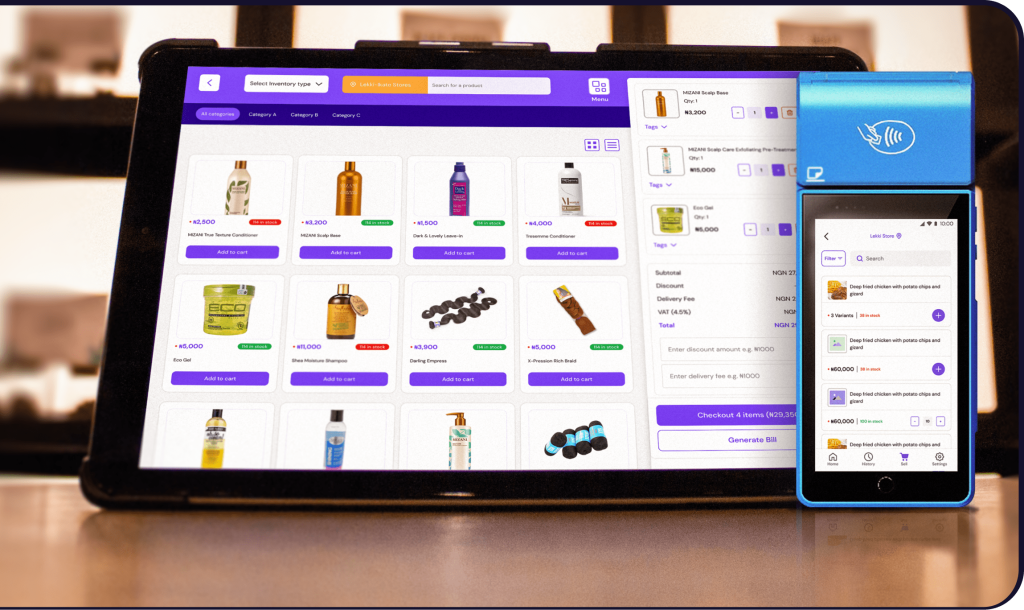
Over 65% of Nigerian small business operators rely solely on their phones for business operations.
This means:
- mobile-first design,
- lightweight apps,
- simple user experience.
Laptop-dependent foreign software fails here.
7. Staff trust and accountability challenges
Because many Nigerian businesses employ temporary or junior staff, software must support:
- staff access control,
- accountability logs,
- shift management,
- cash tracking.
This is a critical feature for local retail SMEs.
What Should the Best Inventory Software in Nigeria Offer?
Based on the realities above, the best solution must be:
- Built for Nigeria, not adapted from abroad
- Mobile-first, because many owners don’t have laptops
- Offline-capable, because network issues are real
- Easy to use, especially for first-time digital adopters
- Supportive, with onboarding and customer education
- Integrated, covering multiple banks and payment partners
- Fast at the point of sale, especially for high-volume stores
This is where Lumi Business stands out.
Why Lumi Business Is One of the Best Inventory Software Options in Nigeria
When choosing the best inventory software Nigeria businesses rely on the following:
1. Designed Specifically for Nigerian Business Realities
Most Nigerian entrepreneurs start unregistered and operate informally. Lumi Business helps them:
- track sales,
- generate receipts,
- record payments,
- and document business activity,
making the transition from informal to formal easier.
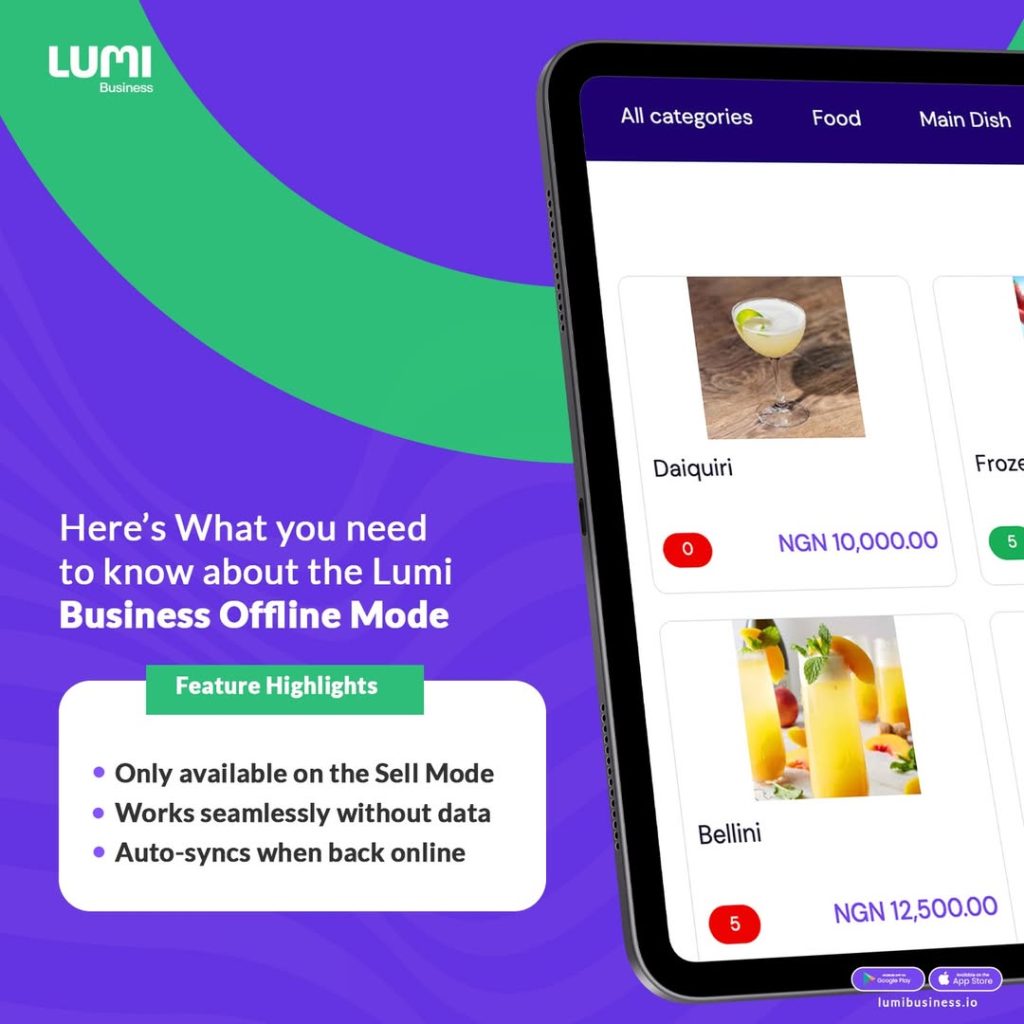
2. Works Both Offline and Online
Because Lumi Business was built with internet challenges in mind, it allows business owners to:
- continue selling when the network goes off,
- sync data automatically once connectivity returns,
- and operate their stores from anywhere — even with a tight schedule.
3. Mobile-First Inventory & Sales Management
Not every business owner has a computer. Lumi Business solves this by allowing inventory tracking and sales operations directly from mobile devices.
The Lumi Sales Cashier App enables businesses to sell products in 5 seconds or less, using features like:
- barcode scanning with a phone camera
- quick product search
- fast checkout for high-volume shops
- pend checkout for high-volume shops
4. Built for Multi-Banking Reconciliation
Nigerian businesses often use multiple banks and POS terminals. Lumi Business integrates with six (6) payment partners, allowing owners to:
- see all transactions in one place,
- reconcile cash, POS, and transfers easily,
- and reduce errors from manual recording.
5. Hands-on Support & Education
Because many businesses are first-time software users, Lumi Business provides:
- on-ground onboarding support,
- customer success calls,
- educational materials,
- and a responsive customer care unit.
This ensures that no business owner feels lost or abandoned during setup.
Top Inventory Software Options in Nigeria
Many business owners search for the best inventory software Nigeria can offer, here are the top 5
1. Lumi Business
Best for: Offline mode, multi-bank reconciliation, mobile-first inventory, and Nigerian-specific retail needs. Lumi Business is often ranked among the best inventory software Nigeria retailers use because it solves real local challenges
2. Stocker ERP
Best for: Multi-location businesses and structured retail stores with formal inventory tracking.
Note: Primarily online; may require more setup for very small shops; Nigerian bank integrations are limited.
3. Invema
Best for: Supermarkets, pharmacies, and offline-capable stores.
Note: Supports offline work and mobile POS; direct Nigerian bank integration is partial; advanced multi-bank reconciliation may require higher plans.
4. Klakpad
Best for: Multi-branch businesses or franchises needing centralized inventory control.
Note: Offline mode exists but is partial; heavier solution for single small shops; some Nigerian bank reconciliation supported.
5. QuickBooks
Best for: Accounting-focused businesses needing formal bookkeeping and reporting.
Note: Cloud-based; offline mode not supported; Nigerian bank integration limited; mobile POS exists but not optimized for fast retail checkout.
Comparison Table
| Software | Storefront / Online Store | Mobile Checkout | Payment Integration (Nigeria) | Offline / Online Sync |
| Lumi Business | ✅ Yes (Lumi Storefront) | ✅ Full mobile POS checkout | ✅ Yes – Multi-bank, POS partners, Nigerian-focused | ✅ Full offline POS + auto-sync |
| Stocker ERP | ⚠ Available (Enterprise tier, not lightweight) | ✅ Yes | ⚠ Limited Nigerian integrations | ❌ Mostly online, minimal offline |
| Invema | ❌ Not focused on storefront | ✅ Yes | ⚠ Partial (some POS support, limited bank integration) | ✅ Offline supported |
| Klakpad | ⚠ Yes (for multi-branch setups) | ✅ Yes | ⚠ Partial Nigerian payment support | ⚠ Partial offline mode |
| QuickBooks | ❌ No storefront for Nigerian retail | ⚠ Limited mobile POS | ❌ No Nigerian payment integrations | ❌ No offline mode |
Frequently Asked Questions (FAQs)
1. What is the best inventory software for small businesses in Nigeria?
Lumi Business is one of the best because it is built specifically for Nigerian retail operations, supports offline mode, and integrates with multiple payment partners.
2. Can inventory software work without internet in Nigeria?
Yes. Tools like Lumi Business provide full offline POS operations so businesses can continue selling during network downtime.
3. What is the best POS software for Nigerian SMEs?
For multi-banking reconciliation and offline sales, Lumi Business ranks among the top options.
4. Which inventory app is best for supermarkets or pharmacies?
A solution that supports fast checkout, barcode scanning, and multi-branch operations — such as Lumi Business — is ideal.
5. Do Nigerian businesses really use multiple bank accounts?
Yes. Due to network issues, multi-banking is extremely common.
So… What’s the Best Inventory Management Software in Nigeria?
When you search for “the best inventory software for Nigerian small businesses,” don’t just look at features.
Think about:
your environment,
your internet situation,
your payment channels,
your business structure, and
your growth stage.
The best software for Nigerian SMEs is the one built in Nigeria, for Nigerian realities, and designed to help businesses grow regardless of device, location, or infrastructure challenges.
If you’re looking for the best inventory software Nigeria, Lumi Business is built for you
One Response
The shift to digital inventory management is so important, but I think there’s still a huge gap in helping businesses get started. Many small shops might need more support in transitioning from manual to digital systems.